27 MAY 2024
Located at the source of Yamuna river, in the Garhwal Himalayas, Yamunotri is one of the most revered pilgrimage site of the Hindus. It is one of the four Pilgrimage sites of the char dham yatra.
Where is it located?
- Country – India
- State – Uttarakhand.
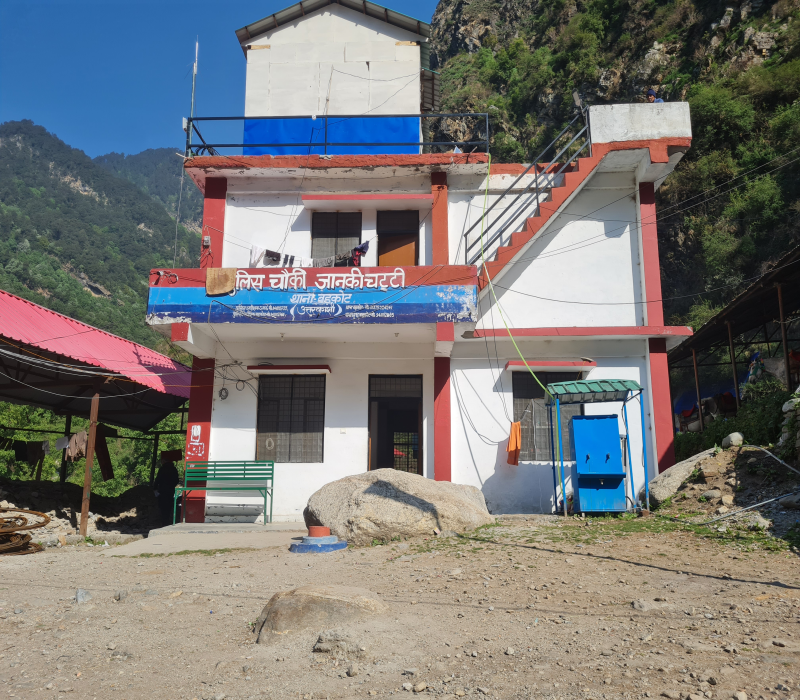
- Location – Janki Chatti is the place to start the Yamunotri trek.
How to get here?
- By Air – The nearest airport is Jolly Grant Airport, Dehradun, yet another 210 kms from Dehradun airport to Janki Chatti – approximately 7 hrs by road.
- By Air – Another option is Delhi airport (flights are more frequent and cheaper to Delhi from various parts of India). From Delhi a train can be considered till Dehradun or Rishikesh, and yet another 210 kms from Dehradun airport to Janki Chatti – approximately 7 hrs by road.
- By train – Take a train from any part of India to Dehradun station, and a taxi can be hired from Dehradun to Janki Chatti. Dehradun is very well connected by air and train as well as road.
Best time to visit Yamunotri
The best time to visit Yamunotri is from May to June and September to November. During these months, the weather is pleasant and ideal for trekking. However, the monsoon season, from July to August, should be avoided as the region experiences heavy rainfall, which can make the trekking trail slippery and risky.
The temple typically opens on Akshaya Tritiya (usually in April or May) and closes on Yama Dwitiya (the second day after Diwali).
The temple is perched at an altitude of 3,293 meters, and around 6 km trek from Janki Chatti.
My Experience
The journey to Yamunotri mirrors our inner strength and resilience, serving as a testament to our perseverance. Nestled in the majestic Himalayas, the temple attracts not only pilgrims but also nature enthusiasts who come for the trek amidst the breathtaking landscapes. The trek through the Himalayas, surrounded by awe-inspiring landscapes, almost feels like a purification process, both physically and mentally.
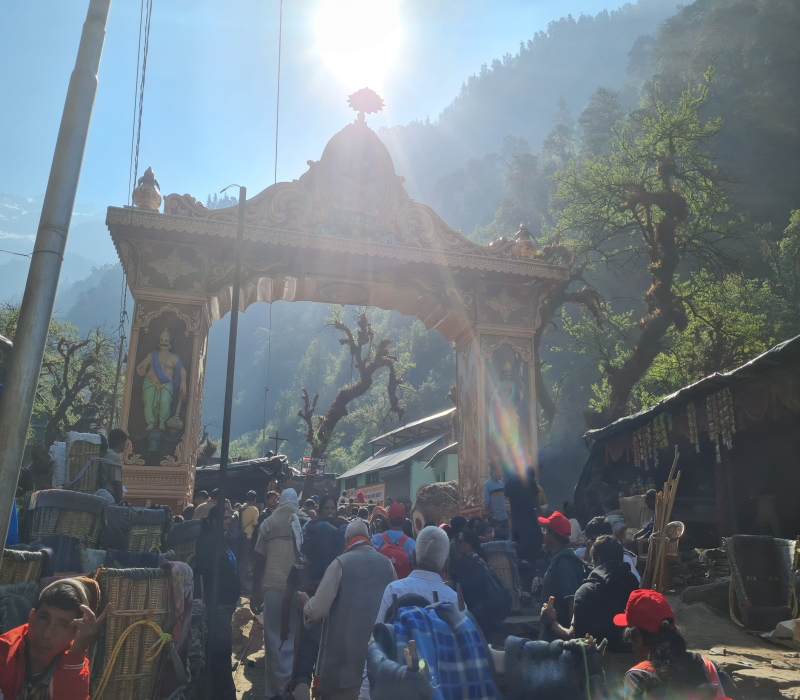
The trek from the starting point to Yamunotri Temple is approximately 5–6 km. However, the vehicle parking area is located about 1 km before the actual starting point of the trek—so be prepared for that extra distance on foot. If walking the entire route feels too strenuous, horses and palanquins are available for hire along the way to assist pilgrims.
I start with the intention of walking all the way, as I was told that the trek was just 4 km long. This turned out to be incorrect information from the start, which was a bit misleading.
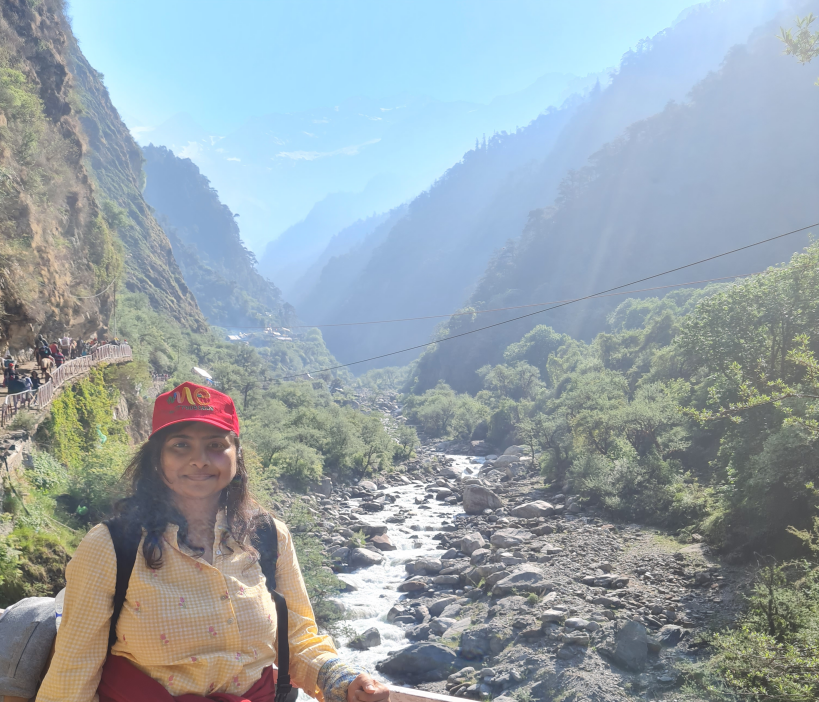
I reach the Janki Chatti parking lot around 10 AM and begin the trek, fully determined to walk all the way to Yamunotri without taking a horse or palanquin. The sun is intense, the slope is steep, and the path is rough and rocky. The trail is a narrow, single lane—shared by fellow pilgrims going up and down, as well as horses and palanquins—which makes the climb even more challenging.
Step by step, I push forward, taking in the raw beauty of the Himalayas. The journey tests my stamina and willpower. After nearly four hours of steady walking, I finally arrive at the temple—and what a sight it is! The roar of the Yamuna River fills the air, and the temple, painted in vibrant colors, stands proudly against the dramatic mountain backdrop. The moment is surreal.
There isn’t much of a crowd, and the darshan queue moves quickly. The shrine exudes peace, and I take a quiet moment to absorb it all. This entire experience—the effort, the surroundings, the divine energy—feels unforgettable. Even as I stand here, I know this memory will stay with me forever.
There are several natural hot springs here, now thoughtfully converted into dedicated bathing zones—separate areas for men and women. Many pilgrims gather in these pools, believing the sacred waters help wash away sins and purify the body and soul before darshan. The atmosphere is reverent, yet lively.
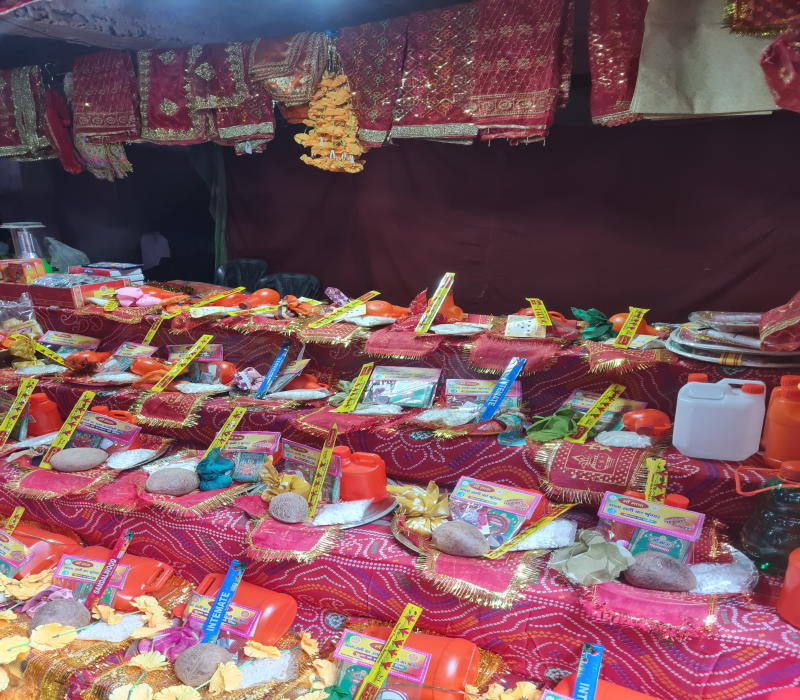
Nearby, there’s a special hot spring well used for cooking rice. Devotees bring raw rice tied in small cotton potlis (cloth bundles), which an attendant carefully dips into the steaming water. Within minutes, the rice is perfectly cooked—soft, fragrant, and ready to be offered as prasad, a sacred offering. It’s a beautiful blend of devotion, tradition, and nature’s own warmth.
Since there are many people waiting, my potli is dipped into the hot spring for barely a minute. The rice doesn’t fully cook, but I don’t mind. I carefully dry the semi-cooked grains and decide to take them home. Once back, I mix them into my regular rice container—so each time I cook rice, a small part of that sacred offering becomes part of my meal. In this quiet way, I continue to cherish the prasad, keeping the memory of Yamunotri alive in my daily life.
I spend about an hour at the mountain top, soaking in the peace and stillness. The fresh Himalayan air fills my lungs and feels deeply rejuvenating—like nature itself is healing me. I sit quietly, absorbing the moment, letting the serenity of the temple and the roar of the Yamuna settle into my heart.
I start my walk back downhill. The path, though familiar now, is still shared with horses and fellow pilgrims. By the time I reach the parking lot, it’s around 6 PM. My legs are tired, but my spirit feels light—grateful for the experience, the challenge, and the grace of Yamunotri. Exhausted but content, I get into the vehicle, and we begin the drive back to Barkot. The winding mountain roads feel calmer now, the day’s spiritual energy still lingering within me.
Around 8 PM, we arrive at the hotel. To my delight, a piping hot dinner is waiting—simple, comforting, and deeply satisfying after such an intense day. It’s the perfect end to a long, unforgettable journey to Yamunotri.
Our night stay – Barkot. Next destination – Gangotri
Tips for travellers
- There are sufficient washrooms all the way up until the temple, so do not hesitate to hydrate well.
- Read up on the multiple legends of Goddess Yamuna and her twin brother Yam.
- Read up on the history of the temple as well.
- I make the mistake of skipping food during the uphill trek, thinking I’ll eat later. I grab a small bite while walking down, but it’s not enough. By the time we’re on the bus back to Barkot, I feel nauseous. The acid builds up in my stomach, and I end up throwing up at the hotel.
- It’s a hard lesson—always eat small, regular meals during the trek. Your body needs the fuel to handle the altitude, exertion, and long hours.